
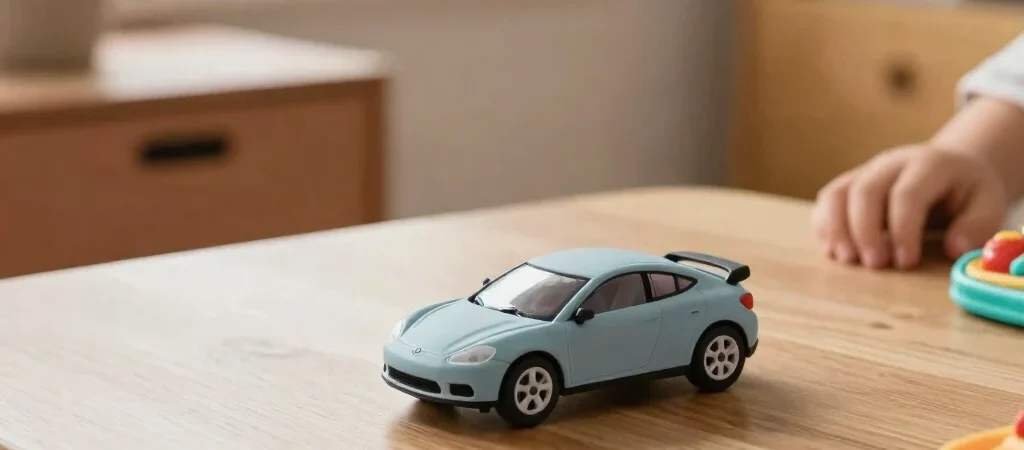
When I’m considering a toy for a child with sensory needs, the most useful question isn’t whether it is labeled sensory-friendly. It’s whether its particular sounds, textures, movement, and play demands might suit this child—and whether the family can adapt or put it away if they don’t.
Look Beyond the Label
Sensory preferences vary, even among children who share a diagnosis or support need. A soft fabric, a vibrating feature, or a flashing light may be comforting to one child and unwelcome to another.
Before choosing, think about what the child already seeks out or avoids: loud sounds, unpredictable motion, particular textures, or busy visual effects. When possible, ask the child or caregiver what tends to work instead of guessing from packaging.
Give RC Cars a Closer Look
An RC car can invite shared play, turn-taking, and practice with simple controls, but it also brings motor noise and movement that may be too much for some children. Check how the controls work, how much space the car needs, and whether the play area can be kept clear.
A lower-key first try might mean using the car briefly in an open area with an adult nearby and letting the child set the pace. Keep in mind that battery needs, small parts, age guidance, and supervision matter; check the specific product information before buying.
Make the Gift Easier to Use
A thoughtful gift includes the realities around the toy, not just the toy itself. Consider whether setup is manageable, whether the volume can be controlled, and whether the child can enjoy it in more than one way.
If you’re unsure, a caregiver’s insight is often more useful than a trend or a broad label. Choose for the child in front of you, and leave room for the possibility that a well-meant gift may not become a favorite.